

If you’ve followed Share Your Sleep Story for some time, you may already have an idea of the struggle that living with narcolepsy represents. Even for those of us who don’t have it, the ever-growing demands of everyday life are enough to leave us feeling like there aren’t enough hours in a day to get everything done: between full-time work or studies, commute time, family and childcare obligations, the unending chores of cooking, packing lunches, shopping, cleaning the house, doing laundry… how many of us also manage to get the recommended amount of moderate physical activity every single day, sleep at a reasonable time, and still find time to floss?
If you succeed in accomplishing everything, frankly, hats off to you! But now, imagine you had to do it all while also managing excessive sleepiness during the day, forcing you to take naps, adding up to an hour or more every day lest you lose your ability to focus and end up succumbing to sleep attacks anyway. Imagine living your life in a constant state of tiredness that you can only learn to cope with, owing to disrupted sleep or even insomnia at night.
Would your answer stay the same?
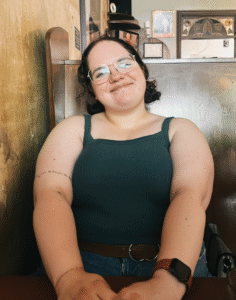
A nurse working in the field of public health, Rebecca has been living with the symptoms of narcolepsy since she was twelve years old. “So I’ve had it for 13-ish years now, half my life,” she said early on in the discussion. Despite strongly suspecting that she had narcolepsy after reading about it online, on a night where yet another bout of insomnia had her looking up sleep disorders, the diagnosis wasn’t exactly something she wanted.
It’s a hard diagnosis to deal with. As much as you suspect it, you know it’s chronic, and you hope that it’s something else because you don’t want to have to deal with this forever.
By the time she was diagnosed at 18 years old, Rebecca had grown used to falling asleep in class, napping after school, and missing extracurriculars because of exhaustion. She was studying to become a nurse, and her life had suddenly become a lot more complicated. “People would ask, ‘Why would you go into nursing when you know it’s 12-hour shifts, working nights, all that?’ Well, I didn’t know [I had narcolepsy] when I decided to go into nursing.” Her driver’s license was also suspended for medical reasons upon her diagnosis.
And this is where the challenge of living with narcolepsy lies. Dealing with its symptoms, the daytime sleepiness and nighttime insomnia, the fragmented sleep, the often-present sleep paralysis and hallucinations, is difficult in itself. But those symptoms don’t exist in a vacuum. They affect people with lives to live, obligations to fulfill. Falling asleep during the day is one thing; falling asleep in class, or at work, is quite another. And they affect people who, on top of narcolepsy, may have other sleep disorders or health conditions, with the combination being even worse than the sum of its parts.
Like Rebecca, who also suffers from sleep apnea and depression. Two conditions that can, on their own, impact sleep and energy. When combined with narcolepsy, it isn’t always easy to know where one ends and the other begins.
Talking to doctors, they’re like, ‘It’s hard to tell if you would have had [depression and anxiety], or if it’s a result of narcolepsy.’ When I have a depressive episode, it’s so easy to sleep more. That’s a symptom of depression anyway.
Rebecca also uses a CPAP machine to manage her sleep apnea. But she hasn’t always been diligent in its use, especially since she didn’t like it at first, back when her sleep apnea was ‘only’ upper airway obstruction. But when the condition worsened, Rebecca started using her CPAP consistently and she noticed it made a big difference.
It made a big difference in feeling rested when I wake up. Looking back, I do see that when I wasn’t using it, I was definitely more tired. Now, I feel rested. I’m back to where I was – still tired during the day, that’s never going away – but back to normal for managing my narcolepsy symptoms, as opposed to managing narcolepsy while being extra tired from sleep apnea. It’s hard to distinguish the two. When I’m not treating the sleep apnea, it’s mostly that narcolepsy symptoms get worse.
Thankfully, through a combination of medication, good habits, support from others, advocacy, and a lot of perseverance and willpower, Rebecca has found how she can best live her life, work a job she loves, and hang out with friends who understand her napping doesn’t mean she’s bored. But, as experienced by several people with narcolepsy, the way there was far from straightforward.
MEDICAL MEANDERING
Rebecca first noticed signs of narcolepsy at the young age of twelve. Which is fairly typical: narcolepsy generally onsets between late childhood, teenage years and early adulthood. Rebecca was a very active child who would engage in multiple activities in a day, like playing basketball after school, then going to a dance class in the evening.
She remembers when that started to change.
“A couple times, I would fall asleep after school, or sometimes in class when we did something like watch a movie. But then I started being exhausted, not wanting to go to dance anymore. I would fall asleep on the way to dance, or nap after school.”
Her mother noticed and took Rebecca to the doctor. But with her being so physically active, and at an age where going through puberty was also a factor, her tiredness didn’t surprise her doctor much. “She’ll get through it,” he said.
Only she didn’t.
By grade 10, in fact, it had gotten worse: Rebecca napped at home every day after school, and she also noticed her sleep at night was fragmented. She was fifteen by then, and feeling frustrated as her sleepless nights went by. Ironically, it was on one such night that she came across narcolepsy on the internet. “I thought that was definitely what I was experiencing.”
And so, three years after her first consultation, Rebecca returned to the doctor and told him she suspected she had narcolepsy. In hindsight, she was handing him her exact condition on a silver platter – and while, of course, doctors can’t always make a diagnosis based on a patient’s word alone, one might think this would give them a good idea of the symptoms experienced and put them on the right track as to which tests are required. So what did Rebecca’s doctor do?
“He said that [narcolepsy] was very unlikely, that it’s not very common, that my symptoms could be many things. So he sent me to get blood work done to check for thyroid issues, and he assumed maybe my sleep hygiene was bad, just because I was a teen. He told me to make sure to go to bed at a reasonable time, etc. But I was already doing that.”
No sleep study in sight.
Unsurprisingly, Rebecca’s blood tests all came back normal. And by grade 12, her daytime sleepiness had devolved to the point where, instead of falling asleep after school, she would fall asleep right after lunch. “It was like my battery had drained at that point. And after lunch was math class, so I kept falling asleep in math class. Thankfully I was good at math, so I could get by, but my grades still dipped.”
She returned to the doctor, and this time, she insisted. This wasn’t normal. None of her friends were regularly falling asleep in the middle of the day. Finally, she was referred to a sleep study.
The first sleep study, done during the night, clocked Rebecca’s upper airway obstruction. But the doctors could tell there was a deeper problem, and referred Rebecca to a second sleep study, this one done during the day. For it, she had to drive to another city, since the daytime sleep study couldn’t be done locally. They measured her sleep onset and Rapid Eye Movement (REM) sleep onset through a Multiple Sleep Latency Test, or MSLT. Rebecca’s REM onset was exceptional: under five minutes, a telltale sign of narcolepsy. At 18 years old, six years after she first went to the doctor to report her symptoms, Rebecca was diagnosed with narcolepsy.
What should have been a moment for vindication, relief, open conversation and answers, instead abruptly turned into something quite shocking. “It was a brutal transition between five years undiagnosed and suddenly having to sign this form saying I can’t resell my medication, that I can never live alone,” recalls Rebecca. “He recommended sodium oxybate, but he described it very poorly. The context made it seem very extreme, and he told me it’s the salt from the date rape drug. He said that to an 18-year-old girl. I was uncomfortable, I asked if there were any other options we could explore before that, and he said no, that it was the only option. Which I know now isn’t even true.”
Amidst the two new diagnoses – narcolepsy and upper airway obstruction – and the treatments suggested, Rebecca’s driver’s license was also suspended for medical reasons, stacking yet another hurdle that she would have to jump over.
LIVING LIFE
Having gotten several diagnoses and treatment options in a short time, including one she was very much put off by, Rebecca decided to start their management gradually.
“I was started on a CPAP for my upper airway obstruction. So I decided I would try that first, see how it went, then revisit things.” She didn’t start taking any medication for narcolepsy right away.
“I did that for around five months. But then I started university, and again I was falling asleep in class. After the first round of midterms, I failed an exam, and I decided I couldn’t keep doing this, or I would fail out of school.”
Rebecca didn’t want to go back to the same sleep specialist, so she found another one. He recommended her modafinil, a stimulant, to keep her awake during the day; he also recommended taking scheduled naps. “I felt a difference immediately. I could stay awake during class and during the day. So why didn’t the first doctor mention modafinil when I asked if there were any other options?”
Modafinil is a stimulant used to manage symptoms of narcolepsy. Now 26, Rebecca still takes it twice a day, like clockwork. She sees her sleep specialist only once a year for checkups.
With it, she could go about her life much easier, although there would always be limitations. “The doctor said I shouldn’t do night shifts,” she said. “I was in my second year of schooling then. So, in the final year, when you get a placement and follow a trained nurse on her schedule, I had accommodations not to do night shift. Thankfully, I had an interest in public health very early on, which works because it’s daytime work.”
Of course, working a daytime job doesn’t mean symptoms aren’t present. On days where she is really tired, Rebecca might use her 30-minute lunch break to nap in her car or in a private room. She decided to be open with her coworkers, which turned out to be the right decision for her.
One of my managers noticed and she was very understanding. She just wanted to make sure I was okay, since she thought maybe I was sick or something. I was encouraged to get a workplace accommodation. It’s good to have one on file if only to document it, for future managers if necessary, or just to make sure I can’t get in trouble for it.
Her coworkers are also in the loop. Rebecca reported that most of them were curious, since they’re in the medical field, but it was all well-intentioned: they wanted to know what it was, what she experienced, or if there was anything they should do. “I’ve never had anybody that was rude or mean.” When Rebecca has a harder day, where long hours in the office or reading lengthy documents on a computer have her struggling to stay awake at her desk, her colleagues know that just saying her name is usually enough to snap her out of it.
“I’ll just take a little walk or go to the bathroom and I’m okay to work,” she explains. “My workplace accommodation file says I just need a little bit of stimulation. Of course, I still do my work.”
“I’ve been very, very lucky that my workplace is understanding of it and able to work with me.”
The same was true with friends. Rebecca was very open with them, and has yet to meet someone who isn’t accepting. “If anything, it was actually harder before I was diagnosed,” she laughs, “because when I fell asleep, they didn’t understand. Now, at least they know it’s not because I’m bored.”
Eventually, thanks to modafinil, Rebecca also managed to get her driver’s license back.
“To get your license back, you need to pass a sleep test and then wait a year with no sleep attacks,” she explained. “I tried once right after my diagnosis, before I took medication, and I failed immediately. But with modafinil, I was able to pass. So 2-3 years after my diagnosis, I had a license again. The amount of freedom is much better when I can drive myself places.”
Still, Rebecca remains aware of her limitations, especially when it comes to road safety. She never tempts fate by pushing herself. Instead, she pulls over as soon as she feels tired. “I don’t even want to be in a position that’s dangerous to me or to someone else.”
Finally, managing her symptoms also required making changes to her lifestyle. Naps after work or during lunch were of course in the picture, but before everything, Rebecca also used to sleep at a very reasonable 9 or 10 p.m. Only she found that she would wake up multiple times during the night and be unable to fall asleep again for as long as an hour.
Instead of fighting it, following a recommendation from a sleep doctor, she counterintuitively started going to bed later, at midnight. “I’ll sleep for three hours, then wake up for an hour. I’ll put a load of laundry on, or go read, do something, distract myself. But I’ll watch the time. And after 30-45 minutes, I’ll tell myself it’s time to go back to bed.” That way, she sleeps another three hours from 4 a.m. to 7 a.m., then goes to work. That gives her six hours of sleep per night, on average, in two blocks of three hours.
It’s a different schedule than most people. Most people think it’s too late to go to bed, but when I tried sleeping earlier, I found it much more frustrating to wake up many times a night. Now, it’s only once. It’s probably the same amount of sleep, but it’s more consolidated, so I prefer it.
Even when she comes home from work tired, after her usual post-work nap, Rebecca will push herself to stay awake until midnight. Following her sleep schedule is important to get the best sleep possible at night, one of many concessions Rebecca makes to make her narcolepsy more bearable.
“Some days, I accept that this is my normal, this is how it is. But other days, I feel like it sucks that this is my normal.”
CALL FOR CHANGE
Rebecca’s story of overcoming and adaptation highlights the need for change in several areas concerning the public perception of narcolepsy, especially among the medical profession.
- Don’t dismiss teenagers: It took Rebecca three visits to the doctor over her teenage years before she was even referred to a sleep study at age 18, despite strongly suspecting she had narcolepsy and telling her doctors about her sleep issues. She can’t help but feel her age had something to do with it. “In my experience, with young people in general, they are more dismissive. Other friends faced dismissive attitudes too, especially when they’re young and healthy-looking.” And since teenage years coincide heavily with the typical onset of narcolepsy symptoms, it’s a recipe for disaster. On average, it takes ten years from when symptoms start showing to be diagnosed with narcolepsy, unduly prolonging unnecessary suffering for people who may need medical accommodations to complete their schooling or perform at work.
- Increase doctors’ education: Even when she finally received the correct diagnosis, Rebecca went through a bad medical experience with a doctor who didn’t seem to know her condition and the available treatment options very well. And as a nurse herself, she knows firsthand how little is taught about sleep in an academic setting. Now, she draws on her own experience to help her patients advocate for themselves. As she put it, “It wasn’t in school that I learned what I know now.”
- Awareness and workplace adaptation: Rebecca knows she was lucky to land in such a supportive workplace. Other work environments aren’t so flexible, even when the accommodations required are as little as letting an employee take a 15-minute nap during their break. Failure to accommodate hurts everyone: employers deprive themselves of qualified employees, and people with narcolepsy may find themselves forced to fight for disability benefits after being shunned by too many employers because of their condition.
At least for the foreseeable future, self-advocacy will remain a necessary tool for people with narcolepsy to spread awareness, correct misconceptions, disprove stereotypes about their ability, and fight for the dignity they deserve.

Mara Normandeau, Lawyer

Madhura Lotlikar, Ph.D. candidate, Neuroscience, McGill University